WinnerScript Blog
Every Instinct Has a Shadow: The Part of Strengths No One Talks About
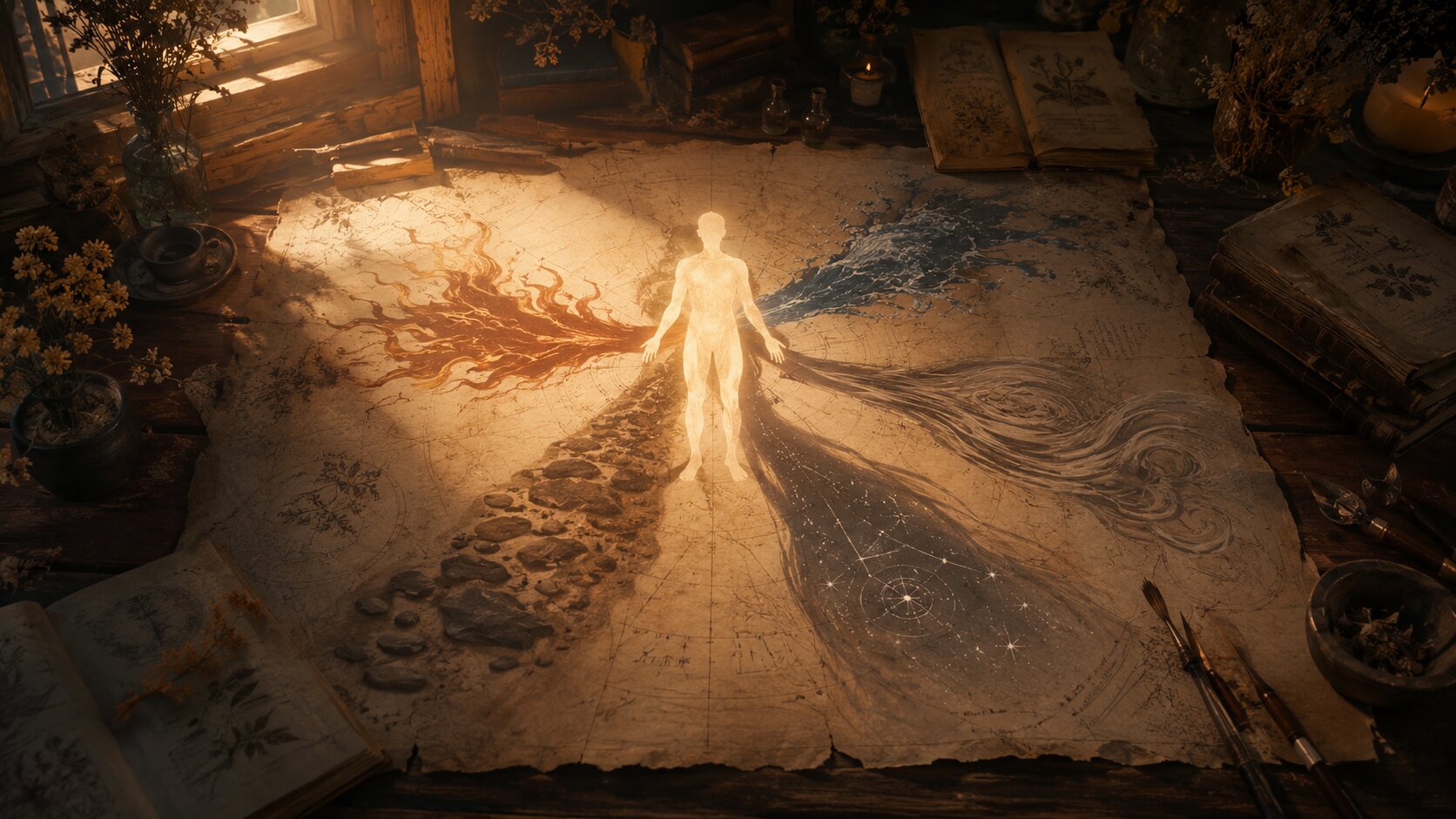
A 2025 meta-analysis by Casali & Feraco (130 studies, N = 275,007, published in the European Journal of Personality) found that character strengths reliably correlate with wellbeing - but the effect sizes tell a more complicated story than "strengths = good." Most correlations fell between r = .10 and .30, while hope and zest showed the strongest overall associations (both r = .52). A follow-up study by Parente, McGrath & Niemiec (2026, International Journal of Applied Positive Psychology, N = 307) suggested that character strength imbalance - both overuse and underuse - can be associated with depression, anxiety, psychotic symptoms, alcohol use, and suicidal behaviors, with underuse consistently emerging as the stronger symptom indicator.
The same trait that helps you thrive may, when turned up too loud or aimed in the wrong direction, become part of what makes you suffer.
This isn't a flaw in the research. It's one of the most useful findings in modern personality science, and it is still too rarely centered in popular strengths work.
Jung called it the shadow. We call it the same thing.
Why the Strengths Industry Avoids This Conversation
There's a reason most personality tools don't talk about shadows.
Shadows don't sell.
"Here are your top 5 strengths - celebrate them!" sells workshops, books, posters, team-building retreats. It's affirming. It feels good. People share their results on LinkedIn. Managers use it as a conversation starter at all-hands meetings.
"Here are your top 5 strengths - and here's how each one can turn against you" doesn't get the same reception.
So the strengths industry made a choice - probably not consciously, probably just by market selection - to emphasize the light and minimize the shadow. The result: millions of people walk around with half a map. They know what they're good at. They don't know what their "good at" costs them.
Niemiec (2019) articulated this gap as the "Golden Mean" problem: every strength exists on a spectrum from underuse through optimal use to overuse. Too little courage becomes cowardice. Too much courage becomes recklessness. The strength doesn't change - the dosage does.
But dosage requires awareness of the shadow. And awareness of the shadow requires the uncomfortable admission that your greatest gift is also your most reliable source of suffering.
What a Shadow Actually Is (And What It Isn't)
Let me be precise about this, because "shadow work" has become a social media buzzword that means almost anything.
A shadow is not your weakness. Your weakness is something you lack - a skill undeveloped, an element with low flow. That's a different conversation.
A shadow is your strength, misdirected. It's the same energy, the same instinct, the same element - but serving a purpose you didn't consciously choose.
Jung's original insight was that the shadow isn't the opposite of who you are. It's the underside of who you are. The part that goes everywhere the light goes, shaped by the same source but invisible to the one casting it.
In WinnerScript's framework, this translates to a specific mapping principle:
Every instinct can cast a shadow through overuse, underuse, or suppression. The shadow is not a defect to be repaired - it's a signal that may show which need the instinct is actually serving.
That last sentence is important enough to read twice.
When someone's strength starts causing problems - when their deep thinking becomes paralysis, when their courage becomes aggression, when their empathy becomes self-erasure - the standard response is "tone it down." Use less of your strength. Find balance.
WinnerScript says something different: don't only tone it down. First ask what it may be serving.
Shadows by Element
Each element has characteristic shadow expressions. Fire, Air, Earth, and Water describe instinctive energy; Ether is slightly different, because it maps senses rather than instincts. But all five fields can reveal the same principle: light creates a shadow when flow loses freedom.
🔥 Fire Shadows: When Courage Becomes Consumption
Fire in its light is courage, initiative, influence, the willingness to be visible and take a stand. Fire says "I will" when everyone else says "maybe."
Fire in its shadow consumes. Not other people - although that happens too - but the person carrying it.
Fire Absorption shadow: The person collects status markers not for what they enable, but for the collecting itself. They absorb validation like a sponge that never wrings. The shadow question isn't "am I confident?" but "am I still confident when nobody's watching?"
Fire Organization shadow: Excellence becomes perfectionism - not Earth-style perfectionism about process, but Fire-style perfectionism about being the best. The standard isn't "good enough" - it's "better than everyone." When the standard can't be met, the Fire doesn't burn out. It turns inward and burns the self.
Fire Externalization shadow: Influence becomes domination. The voice that inspires becomes the voice that silences. The person who "takes charge" becomes the person who takes over. And the most insidious version: the person who believes they're empowering others while actually making others dependent on their energy.
The mapping question: Is your Fire serving genuine conviction - or might it be serving a need to never feel powerless?
💨 Air Shadows: When Thinking Becomes Hiding
Air in its light is insight, analysis, pattern recognition, the capacity to see connections others miss and articulate what hasn't been named yet. Air says "I understand" when everyone else is still confused.
Air in its shadow thinks instead of lives.
Air Absorption shadow: The person takes in information endlessly - books, courses, frameworks, models - without ever acting on any of it. "I need to learn more before I'm ready" is the shadow's favorite sentence. The research becomes a fortress. You can't fail if you never finish researching.
Air Organization shadow: The ideas become so elaborate, so internally coherent, so beautiful in their abstraction that they lose all connection to reality. The person builds a cathedral inside their head - R.I.F.T. (Restriction In Flow Transition) - and mistakes the architecture for the world outside.
Air Externalization shadow: The insight becomes a weapon. The person who can articulate what others feel uses that ability not to connect but to control. "I know you better than you know yourself" is the shadow of Air Externalization - and it's one of the most subtly destructive sentences in any relationship.
The mapping question: Is your Air serving genuine understanding - or might it be serving a need to never be surprised, never be wrong, never lose the illusion of intellectual control?
🌍 Earth Shadows: When Discipline Becomes Armor
Earth in its light is reliability, execution, follow-through - the quiet power of actually getting things done when everyone else is still talking about it. Earth says "it's done" while others say "let's discuss."
Earth in its shadow builds walls and calls them foundations.
Earth Absorption shadow: Caution becomes paralysis by analysis - but not Air-style analysis. Earth Absorption shadow is the person who needs every risk accounted for before taking a single step. Not because they're thinking - because they're afraid. The shadow hides behind the word "prudence."
Earth Organization shadow: Process becomes religion. The spreadsheet, the checklist, the system - these stop serving the goal and become the goal. The person maintains the routine with religious devotion even when the routine no longer produces results. Changing the routine feels like dying.
Earth Externalization shadow: Productivity becomes identity. "I am what I produce." The person who never stops working isn't disciplined - they're terrified of what happens when they stop. Achievement becomes the wall between the self and the void. And the void isn't laziness - it's the emotions they've been outrunning since childhood.
The mapping question: Is your Earth serving genuine mastery and contribution - or might it be serving a need to never sit still with yourself long enough to feel what's underneath the doing?
🌊 Water Shadows: When Empathy Becomes Drowning
Water in its light is connection, empathy, adaptability - the capacity to feel what another person feels and create the safety for authentic relationship. Water says "I'm with you" when others have already turned away.
Water in its shadow dissolves the self.
Water Absorption shadow: The person feels everything - every emotion in the room, every unspoken tension, every subtle shift in mood - and can't separate their own feelings from the feelings they've absorbed. "I'm an empath" sometimes means "I have strong Water Absorption." Sometimes it means "I've lost the boundary between my emotions and everyone else's."
Water Organization shadow: Deep relationships become dependencies. The person who "builds trust" becomes the person who can't function without someone's approval. Loyalty becomes obligation. Love becomes enmeshment. The relationship serves the need to never be alone rather than the desire to truly know another.
Water Externalization shadow: Connection becomes performance. The person who radiates warmth, who makes everyone feel seen, who brings the team together - sometimes does it because it's genuinely who they are. And sometimes does it because they've learned that being the emotional glue is the only way to guarantee they won't be abandoned.
The mapping question: Is your Water serving genuine connection - or might it be serving a need to be needed, a fear of abandonment wearing the mask of love?
✨ Ether Shadows: When Awareness Becomes Distance
Ether in its light is perspective, meaning, synthesis, beauty, timing, and the capacity to see the map without mistaking it for the whole territory. Ether says "let's look at the pattern" when everyone else is trapped inside the moment.
Ether in its shadow floats above the life it is supposed to illuminate.
Ether Absorption shadow: Observation becomes dissociation. The person can describe their inner state with exquisite precision while staying one inch away from actually feeling it. Awareness becomes a viewing platform instead of a doorway.
Ether Organization shadow: Synthesis becomes over-meaning. Every coincidence becomes a sign, every pattern becomes a prophecy, every tension becomes part of a grand architecture. The map becomes so elegant that the messy human underneath it disappears.
Ether Externalization shadow: Purpose becomes superiority. The person who sees the bigger picture may begin to treat other people as less awake, less evolved, less capable of understanding. The lighthouse stops guiding ships and starts judging the sea.
The mapping question: Is your Ether helping you hold more reality - or might it be helping you avoid the part of reality that is too ordinary, too embodied, or too emotionally inconvenient?
Why the Shadow Is Not a Bug
Here's where WinnerScript diverges from both the strengths industry and from most shadow work approaches.
The strengths industry says: "Focus on your strengths. Don't worry about the rest." Shadow work says: "Face your darkness. Integrate it. Heal it." WinnerScript says: "Read the shadow. It may be showing you which need is running the pattern."
The shadow isn't a defect to fix. It's a signal to decode.
When your Air starts building cathedrals instead of sharing ideas, that's probably not just "too much thinking." It may be Air being pulled into a different need - safety, control, or the wish to never be exposed before the idea is perfect. The energy is real. The direction may be off.
When your Fire starts consuming instead of creating, that's probably not just "too much ambition." It may be Fire serving territorial anxiety instead of genuine conviction.
When your Water starts dissolving boundaries instead of creating connection, that's probably not just "too much empathy." It may be Water serving abandonment fear instead of love.
The shadow doesn't need to be killed. It needs to be read.
And reading it carefully changes the intervention entirely. Instead of only "use less of your strength," the question becomes: "where could this strength serve life more freely?"
The Five Shadow Questions
WinnerScript reports include what we call "shadow questions" - probes designed not to diagnose but to illuminate. They're not "what's wrong with you" questions. They're "what might your strength be serving that you didn't choose" questions.
Here are five general versions - applicable regardless of which element dominates:
1. "When did this strength first become necessary - not enjoyable, but necessary?" Strengths that were required in childhood (to survive, to be loved, to avoid punishment) often carry a different charge than strengths that were simply natural. The first kind may have a shadow attached.
2. "What would happen if you couldn't use this strength for a month?" If the answer is "I'd feel lost" - the strength might be carrying more weight than it should. A genuine strength is something you enjoy using. A shadow-driven strength is something you can't stop using.
3. "Who benefits most from your strength - you or others?" Strengths in their light benefit both. Shadows tend to create asymmetry: the helper who never gets helped. The leader who can't be led. The thinker who never lets anyone else have the insight.
4. "What feeling does this strength protect you from?" Every shadow guards a vulnerability. Fire shadows guard powerlessness. Air shadows guard confusion. Earth shadows guard worthlessness. Water shadows guard abandonment. The strength became the wall. The wall became the identity.
5. "If you used 50% less of this strength, what would emerge in the space?" This question terrifies most people. Because the honest answer is usually: "I don't know." And "I don't know" is exactly where the integration begins.
The Difference Between Knowing and Integrating
I want to be honest about something.
Knowing about your shadow is easy. Every personality framework in existence mentions it. Jung wrote about it a hundred years ago. You can learn about shadows in a weekend workshop.
Integrating a shadow - actually allowing the strength to serve its original purpose instead of its defensive one - is the work of years. Sometimes decades. Sometimes a lifetime.
WinnerScript doesn't promise to integrate your shadow. No tool can. Integration requires lived experience, honest relationships, sometimes professional support, and always the willingness to be uncomfortable.
What WinnerScript tries to do is locate the shadow with precision. Instead of vague statements about "embracing your darkness," you get a specific signal: this element, in this phase, appears to be serving a defensive need instead of moving freely.
That's a map, not a cure. But a good map - one that honestly shows where the shadows fall - is worth more than a thousand affirmations that pretend the shadows don't exist.
Why I Talk About This
There's a version of personality work that only celebrates. That tells you you're special, you're gifted, your top strengths are superpowers, and the world would be better if you just leaned into them harder.
I don't do that version. Not because I'm pessimistic. Because I've seen what happens when people lean into strengths they don't fully understand.
I've watched leaders who thought their directness was courage when it was actually suppressed fear. I've watched helpers who thought their empathy was love when it was actually a transaction - care in exchange for not being left. I've watched thinkers who thought their analysis was wisdom when it was actually a very elaborate avoidance of feeling anything at all.
The shadow isn't the enemy. The enemy is the pretense that it doesn't exist.
Every instinct can cast a shadow. And the shadow isn't what makes you broken. It's what makes you human.
The only question is whether you're going to look at it - or let it run you from underneath.
Marek J., co-creator of WinnerScript